Legal Document Retrieval
from the National Archives at Kansas City
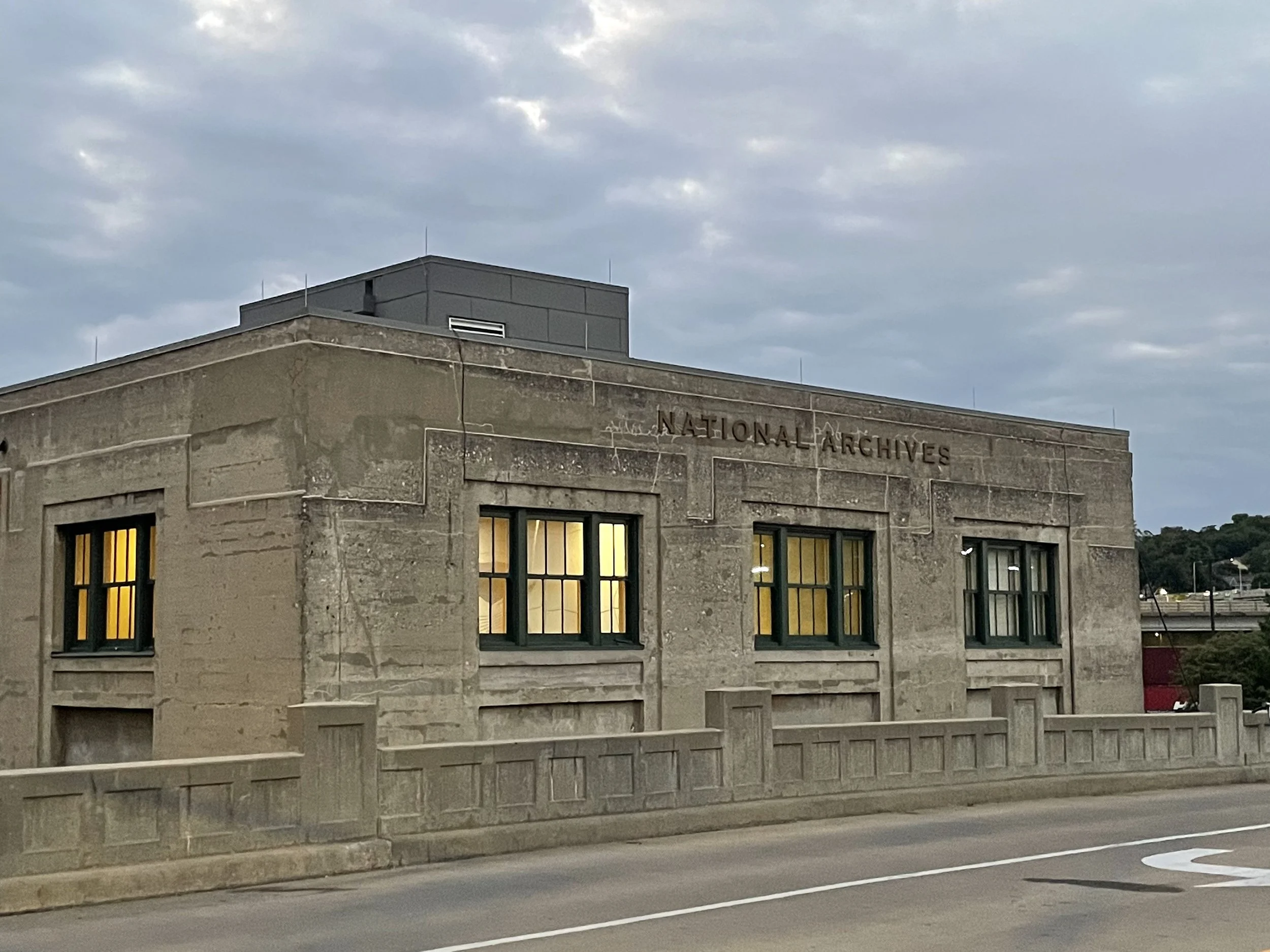
National Archives at Kansas City, 400 W. Pershing Road
Legal document retrieval and docket-based research from the National Archives at Kansas City
If your firm needs someone who can navigate archived court records in person, I offer document retrieval support tailored to legal work, locating specific filings from the National Archives at Kansas City based on the information your law firm is able to provide.
For larger requests, the archive's own reproduction service has limits on how much they'll copy directly. I typically get involved once a request is larger than that, over 200 pages, for court records held at Kansas City. If your request is likely to exceed that, or you're not sure yet how large it is, that's a good sign it's worth reaching out.
Case materials are treated as confidential as a matter of course. If your firm requires a signed NDA or engagement letter, I'm happy to accommodate that. Just mention it when you reach out.
Send me what you have. A docket sheet, a case name and number, a partial description, or a list of entries you're trying to track down all work. I don't provide legal research or analysis. My role is hands-on archival retrieval: going into the archive, locating the physical file, identifying the correct document, and delivering a high-quality PDF scan.
This is often more involved than a typical retrieval request. Filing dates and titles on record don't always match what's actually in the file, so I frequently work from other markers, most often a handwritten docket number, usually in the bottom left corner of the page, to confirm I've got the right document. It's a bit of detective work, not just retrieval. I've picked up a working knowledge of how these records are organized over years of doing this alongside firms.
I'll also let you know if a document doesn't appear to have been retained in the archive. Not everything survives, and I'll flag that as soon as it's apparent so you're not left wondering.
Targeted retrieval vs. full case files
If you already know which entries you need, targeted retrieval is usually the right call. I'll track down exactly what's flagged. But for smaller case files, it can actually be more efficient and less expensive overall for me to retrieve everything rather than working from a flagged list. This doesn't make sense for every case (a file running into dozens of boxes isn't a practical candidate), but for more modest files it's worth asking about. I'm happy to talk through which approach makes more sense once I know roughly what you're dealing with.
Getting an estimate
Estimates are based on the approximate volume of material involved. If you've already been in touch with an archivist, they'll often be able to give you a rough measurement of the records in question. That's genuinely useful information, so pass it along if you have it. If you don't have that yet, that's fine too. I can often work up an estimate once the material's been identified, and I'll always confirm before starting any work.
As with all requests, turnaround depends on the archive itself. Availability of the research room and how the records are indexed are outside my control. Contact me with your request and I'll have an initial estimate ready for you within a business day.
What I'll need to get started
Case name and number
Court/jurisdiction
Inquiry number and the archivist's name, if you've already been in touch with the National Archives (this speeds up getting material pulled to the research room)
Docket sheet with entries flagged, if available (whatever description or partial information you have works too)
Preferred delivery format (a file-transfer service like WeTransfer or Smash is my default, but let me know if you need something else)
If you're tracking a long list of entries, a spreadsheet is genuinely the easiest format for me to work with. It lets me mark off what's been located and what's still outstanding as I go, and makes it simple for both of us to see where things stand partway through a request.
Other questions
Questions about pricing, turnaround, scanning quality, or delivery?
See frequently asked questions →